The State Streets is the pocket of Mesa Verde where every street carries the name of a state, in the blocks just west of Harbor Boulevard below Baker Street, at the northeast corner of the neighborhood. South Coast Metro is across Harbor, the Costa Mesa Country Club is a few blocks west, the Harbor and Adams shopping is a short drive south, and the 405 is up Harbor. California Elementary sits on California Street at the north end of the tract. It is Mesa Verde without the golf course frontage: the same school district, the same era, a lot that is a little smaller, and the lowest detached price in the neighborhood.
Recent sales came from Alabama, California, Colorado, Indiana, Iowa, Michigan, Missouri, New Hampshire, New York, Oregon and Texas. If the address is a state name in this part of Costa Mesa, you are in it, and the comparable set changes accordingly.
The homes that traded here recently were built between 1959 and 1972, median year 1962, with a cluster in 1960 and a later group in 1969 to 1972. The 1960 homes are single story ranch plans; the 1969 to 1972 group brought in two story plans around 2,190 square feet on tighter 5,000 square foot lots, which is why the Alabama Circle pair below are identical twins. The MLS files the neighborhood under two subdivision codes, State Streets I and State Streets II, across at least three recorded tax tracts, which is what a tract that went up in phases looks like.
Every home is a detached single family residence with no common walls. Sizes ran 1,402 to 2,514 square feet, median 2,028. Lots ran 4,850 to 8,515 square feet, median 6,092. The life is a quiet grid of cul-de-sacs and circles a block off a major boulevard, with the river trail and the course within a bike ride and the mall within a ten minute drive.
The first buyer is the Mesa Verde buyer priced off the Country Club loop. They want the neighborhood, the school district and a 1960s house on a real lot, and they have worked out that the State Streets delivers all three at the lowest detached price in Mesa Verde. They buy the larger plans, 2,000 square feet and up, usually in original or partly updated condition, and they do the work over time. The second is the turnkey buyer, often a couple moving within Costa Mesa or a downsizer coming out of a bigger house elsewhere in the neighborhood, who wants the 1,550 square foot single story plan with the new kitchen and nothing left to do. They pay the highest per foot numbers in the tract and they pay them quickly. The third is the renovator, who has read the finding below and understands that the extra square footage in the larger plans has been priced at roughly $100 a foot, which is far less than it costs to build.
What separates the State Streets from the rest of Mesa Verde is the edge it sits on and the phase it was built in. The Country Club codes sell the fairway loop at the highest per foot prices in the neighborhood; the State Streets sells the Harbor Boulevard side, with a later 1969 to 1972 phase of two story homes mixed into the 1960 ranches, smaller lots, a lower median and the tightest price band in the city. Against South Coast Metro across Harbor, it is the detached house on a real lot with no association, where the Metro is largely attached product with dues. Against Halecrest, which lands in a similar price band on the other side of South Coast Metro, the State Streets homes are far larger, 2,028 square feet median against about 1,324, on smaller lots, and a few years newer.
Here is what fell out of the numbers, and it is the most directly usable thing on this page.
Split the fifteen recent closings by size:
The larger group delivers 575 more square feet, 37 percent more house, for $57,500 more money, 3.7 percent more.
That works out to roughly $100 per additional square foot in a neighborhood whose overall median rate is $878 per square foot. You cannot build an addition for $100 a foot. You cannot buy one anywhere else on this coast for $100 a foot either.
Fifteen sales is a small sample, and the mechanism is clear: the smaller homes trading recently have been the renovated ones while the larger homes have needed work, the same pattern I found in Halecrest. So this is not free square footage, it is square footage you may have to finish.
The number is real and it is actionable. If you are willing to take on a project, the larger plans in the State Streets have been priced close to the smaller ones. If you are a seller with a larger unrenovated home, you are competing against a 1,550 square foot house with a new kitchen at almost the same price, and you should prepare accordingly.
Across the fifteen closings, prices ran from $1,325,000 to $1,820,000, with a median of $1,600,000.
The total spread is $495,000, which is 37 percent of the low end. For comparison, South Coast Metro next door spans nearly seven times low to high, and Halecrest spans 50 percent. This is one of the most tightly clustered neighborhoods I have measured.
Price per square foot ran $672.16 to $1,123.40, median $878.38.
The reason for the tight band is the same reason the square footage is cheap: uniform product, one build era, similar lots, and a neighborhood small enough that everyone knows what everything sold for. A State Streets home does not have to guess at its number.
Two homes on Alabama Circle, both 2,190 square feet, both built 1969, both on a 5,000 square foot lot, sold within three months of each other.
One closed at $1,635,000 after 61 days on market. The other closed at $1,670,000 after 16 days.
A $35,000 difference, about 2.1 percent, on identical houses. That is what a legible market looks like from the inside. The interesting difference is not the price, it is that one took 61 days and the other took 16, which is a presentation and pricing story rather than a property story.
1657 Texas Circle, a 1,402 square foot 1971 home on a 6,030 square foot lot, sold for $1,325,000 in December 2024 after 13 days, and again for $1,575,000 in February 2026 after 14 days.
Up $250,000, about 19 percent, in fourteen months, on the same square footage and the same lot.
Both sales took about two weeks, so both were priced correctly for their moment. That is the cleanest single measure of what this neighborhood did over that period.
The State Streets has no homeowners association. Every home carries dues of $0, with no association name and no association amenities. There are no dues and no board.
There is no gate and no community security. It is a plain 1960s tract with public streets, and the data looks like one.
There is no land lease; the State Streets is fee simple. And there are no common walls, so everything here is detached.
Days on market ran 0 to 64, with a median of 13.
Two sales closed at zero days on market and seven of fifteen closed within ten days. Only three took longer than forty days, and the slowest took 64.
Nothing here sat for a year. That is unusual and it fits everything else about the neighborhood: uniform product at a legible price clears quickly, and the worst outcome in this tract has been about two months rather than the multi hundred day listings you see in the higher priced Newport neighborhoods.
As of November 1, 2026, the State Streets had three active listings and nothing pending. The 2,190 square foot 1969 home on California has taken another cut, from $2,148,000 to $1,999,000, and is now 111 days in. The 1,988 square foot 1962 home on Michigan has come off $1,849,000 to $1,749,000 at 52 days. And a 2,190 square foot 1970 home on Nevada has just come on at $2,199,000, four days in.
That is the answer to the question this page asked in September. The California listing did not hold its number; it has now given up $189,000 across two cuts. The new Nevada listing is asking $200,000 more than California started at, which is the next test of the same ceiling.
Does the State Streets have an HOA?
No. Every home carries dues of $0, with no association name and no amenities. There are no dues.
Is the State Streets gated?
No. There is no gate, no controlled access and no community security.
What streets are in the State Streets?
Recent sales came from Alabama, California, Colorado, Indiana, Iowa, Michigan, Missouri, New Hampshire, New York, Oregon and Texas.
When was the State Streets built?
Between 1959 and 1972, median year 1962, with a cluster around 1960 and a later group in 1969 to 1972.
What do homes in the State Streets sell for?
Across fifteen recent closings, $1,325,000 to $1,820,000 with a median of $1,600,000. That total spread is only 37 percent of the low end, one of the tightest bands in Costa Mesa.
What is the price per square foot?
Median $878.38, ranging $672.16 to $1,123.40.
Is a bigger home worth it here?
By the numbers, emphatically yes. Homes at 2,000 square feet and up sold for a median $1,632,500 against $1,575,000 for homes under 1,650, while delivering 575 more square feet. That is 37 percent more house for 3.7 percent more money, roughly $100 per additional square foot.
Why is the extra square footage so cheap?
Because the smaller homes trading recently have been renovated while the larger ones have needed work. It is not free footage, it is footage you may have to finish. But it does mean a buyer willing to renovate has been getting the better end of this market.
How big are the homes?
1,402 to 2,514 square feet, median 2,028.
How big are the lots?
4,850 to 8,515 square feet, median 6,092.
How fast do homes sell?
Median 13 days, ranging 0 to 64. Seven of fifteen sales closed within ten days and only three took longer than forty.
Has the market moved here?
1657 Texas Circle sold for $1,325,000 in December 2024 and again for $1,575,000 in February 2026, up about 19 percent in fourteen months on the same square footage and lot.
Is anything for sale right now?
As of November 1, 2026, three active listings: the California home, cut again to $1,999,000 at 111 days, the Michigan home cut to $1,749,000 at 52 days, and a 2,190 square foot 1970 home on Nevada newly listed at $2,199,000. The Missouri home that was pending at $1,445,000 closed August 27 at $1,403,000. Note that both the Nevada listing and, until its second cut, the California one were asking above every recorded sale in the neighborhood over the last two years.
Are there condos or townhomes in the State Streets?
No. All homes are detached single family residences with no common walls.
Is the State Streets on a land lease?
No. The State Streets is fee simple.
Which school district serves the State Streets?
Newport Mesa Unified School District. California Elementary is on California Street at the north end of the tract. Attendance boundaries are set by the district and do change, so confirm your specific address with the district before relying on an assignment.
Where does the data on this page come from?
The California Regional MLS, using both State Streets subdivision codes together and cross checked against a public remarks search, with recorded closed sales rather than list prices or estimates. Figures are current as of the last update to this page and should be verified for any specific property.
22,247 people live in The State Streets, where the median age is 37 and the average individual income is $49,850. Data provided by the U.S. Census Bureau.
Total Population
Median Age
Population Density Population Density This is the number of people per square mile in a neighborhood.
Average individual Income
The State Streets has 8,446 households, with an average household size of 3. Data provided by the U.S. Census Bureau. Here’s what the people living in The State Streets do for work — and how long it takes them to get there. Data provided by the U.S. Census Bureau. 22,247 people call The State Streets home. The population density is 13,643 and the largest age group is Data provided by the U.S. Census Bureau.
Total Population
Population Density Population Density This is the number of people per square mile in a neighborhood.
Median Age
Men vs Women
Population by Age Group
0-9 Years
10-17 Years
18-24 Years
25-64 Years
65-74 Years
75+ Years
Education Level
Total Households
Average Household Size
Average individual Income
Households with Children
With Children:
Without Children:
Marital Status
Blue vs White Collar Workers
Blue Collar:
White Collar:
There's plenty to do around The State Streets, including shopping, dining, nightlife, parks, and more. Data provided by Walk Score and Yelp.
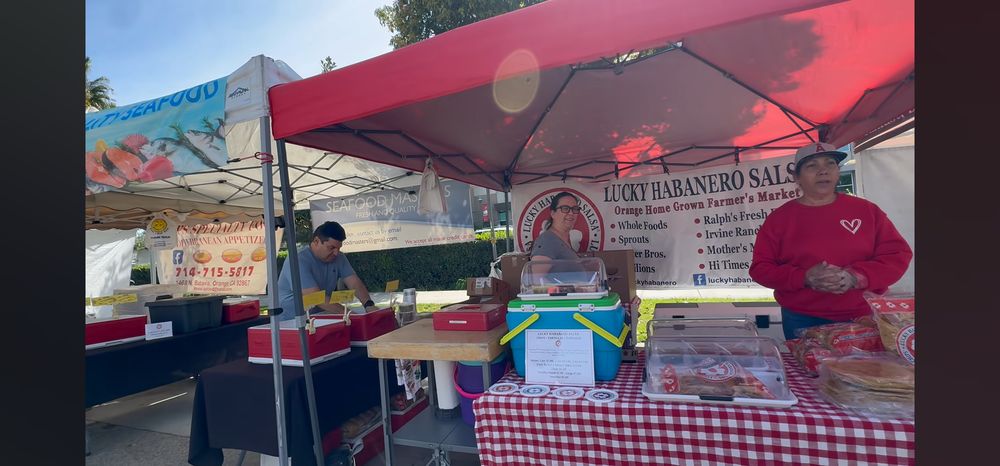
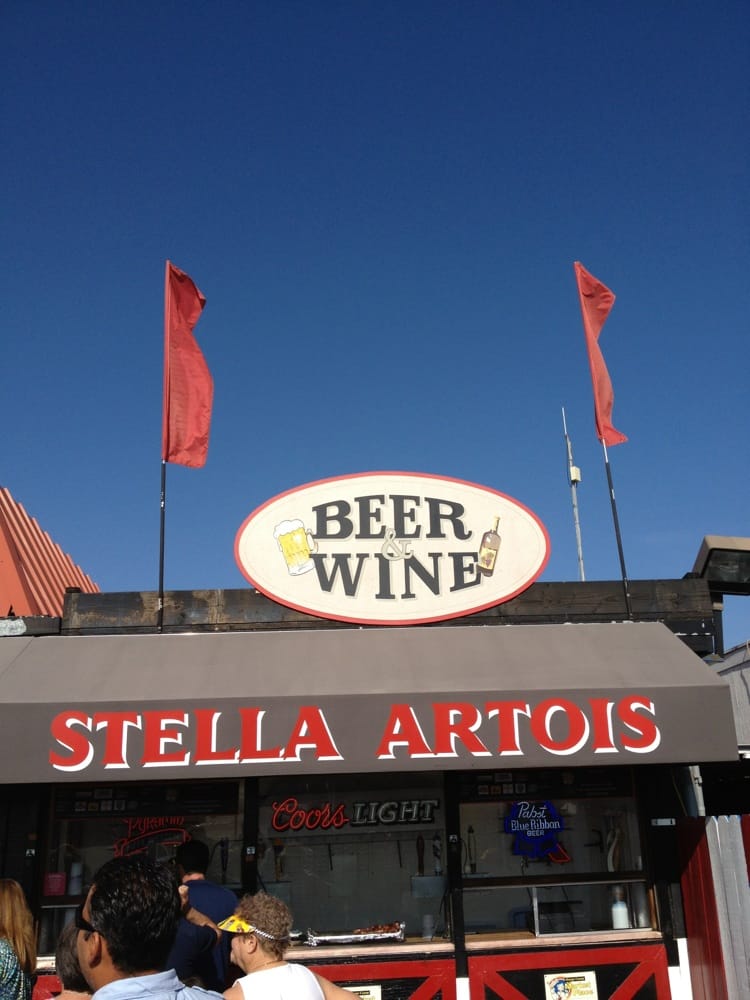
Explore popular things to do in the area, including Her Menu, Lucky Habanero Salsa, and Beer & Wine.
| Name | Category | Distance | Reviews |
Ratings by
Yelp
|
|---|---|---|---|---|
| Dining | 0.24 miles | 0 reviews | 0/5 stars | |
| Dining · $$ | 0.27 miles | 32 reviews | 4.4/5 stars | |
| Dining | 0.29 miles | 0 reviews | 0/5 stars | |
| Dining | 0.3 miles | 1 review | 5/5 stars | |
| Dining · $$ | 0.36 miles | 3 reviews | 4.3/5 stars | |
| Active | 0.27 miles | 3 reviews | 1/5 stars | |
| Active | 0.35 miles | 0 reviews | 0/5 stars | |
| Beauty | 0.24 miles | 0 reviews | 0/5 stars | |
| Beauty | 0.65 miles | 0 reviews | 0/5 stars | |
| Beauty | 0.66 miles | 0 reviews | 0/5 stars | |
| Beauty | 0.68 miles | 0 reviews | 0/5 stars | |
| Beauty | 0.68 miles | 0 reviews | 0/5 stars | |
| Beauty | 0.8 miles | 0 reviews | 0/5 stars | |
| Beauty | 0.85 miles | 0 reviews | 0/5 stars | |
| Beauty | 0.85 miles | 0 reviews | 0/5 stars | |
| Beauty | 0.85 miles | 0 reviews | 0/5 stars | |
|
|
||||
|
|
||||
|
|
||||
|
|
||||
|
|
||||
|
|