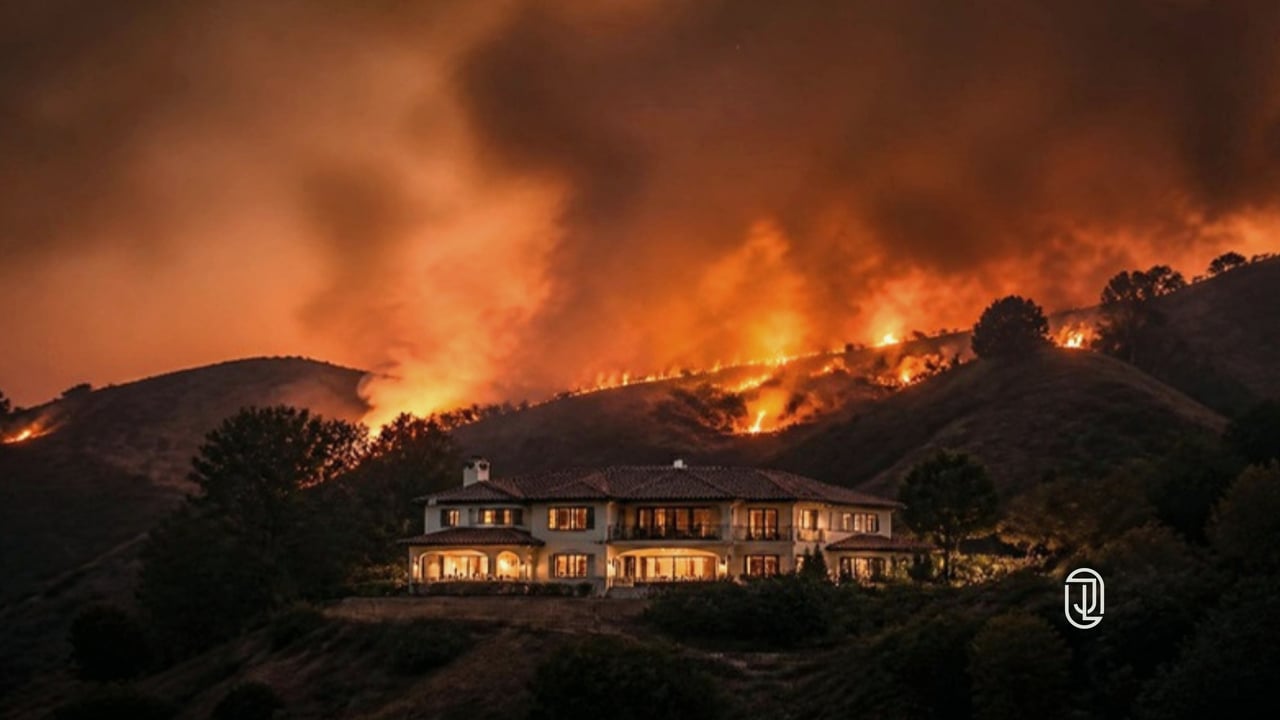
You're twelve days from closing on a home in Irvine. Contingencies are off, the loan is approved, the movers are booked. Then a fire starts in the hills, evacuation warnings go out across south Orange County, and your lender calls to say they can't fund.
Nothing in the contract said anything about wildfires. Yet the whole transaction just stopped. This post walks through why that happens, whether a fire gives a buyer a way out without losing their deposit, and why I don't hand buyers keys or early access until the county has recorded the deed and their insurance is live.
Why insurers and lenders freeze closings during an active fire
Two things have to happen before a financed purchase can close: the buyer has to have a homeowners policy in force, and the lender has to see proof of it. During an active wildfire, both pieces can stall at the same time.
Insurers stop binding new policies
Most carriers have an internal rule that pauses new business, and sometimes coverage increases, anywhere near an active fire. The trigger is usually a distance from the fire line or an evacuation zone, often in the range of 5 to 15 miles, and the pause stays in place until the carrier lifts it. Your agent may have quoted the policy weeks ago. If it hasn't been bound and the effective date hasn't arrived, the quote is just a number on paper.
Lenders won't fund without a bound policy
A hazard insurance binder with the lender named as mortgagee is a standard funding condition. No binder, no wire. A lender can also pull a file back into underwriting if the property sits inside an evacuation zone, and some will require a re-inspection or a new appraisal once the fire is contained before they release funds.
The state moratorium is a different thing
After the Governor declares a state of emergency, the Insurance Commissioner can order a one-year moratorium that stops carriers from non-renewing or canceling existing policies in and around the fire perimeter. That protects people who already own and insure a home. It does not force any carrier to write a brand-new policy for a buyer in escrow.
What this adds up to is a holding pattern. The seller still owns the house. The buyer still owes the balance of the purchase price. And the calendar in the contract keeps running.
Does a fire delay give you an out without losing your deposit?
Usually not on its own. A wildfire nearby is not, by itself, a cancellation right in the California Association of Realtors purchase agreement. Whether a buyer can walk away and keep the earnest money deposit depends on which contingencies are still open on the day the fire starts, and on what actually happens to the property.
Where you are in escrow | Can the buyer cancel and keep the deposit? | Why |
|---|---|---|
Insurance contingency still open | Yes | The current C.A.R. form carries its own insurance contingency, 17 days by default. If the buyer cannot get coverage they find acceptable inside that window, they can cancel and the deposit comes back. |
Loan contingency still open | Usually yes | If the lender will not fund because no policy can be bound, the buyer is unable to obtain the loan on the contract's terms. Document the lender's refusal in writing. |
Investigation contingency still open | Often yes | Buyer satisfaction with the property's condition and insurability is part of this contingency. Smoke, ash and access issues are legitimate reasons to walk. |
All contingencies removed, property undamaged | No, not by default | The contract still binds. A buyer who refuses to close is in breach, and a seller can keep the deposit, capped at 3% of the price on a one-to-four-unit home the buyer intended to occupy. The practical answer is to extend escrow in writing. |
All contingencies removed, property damaged by the fire | Depends on the damage | See the section on damage below. Significant damage before close shifts the leverage back to the buyer. |
The honest takeaway for buyers: once you release contingencies, a fire delay becomes a problem you and the seller have to manage together. Most sellers will sign an extension, because the alternative is putting the home back on the market in the middle of a fire. But the extension is a negotiation, not a right.
For sellers, the risk runs the other way. A buyer who cannot bind insurance cannot close, and no demand to close escrow will change that. Pushing a buyer into default during a fire rarely ends with the seller keeping a 3% deposit and a clean exit. It ends in mediation.
What rights do cash buyers have?
The same contract rights as a financed buyer, minus the one excuse a financed buyer gets for free. Cash doesn't change the purchase agreement. It removes the lender, and the lender is the party that refuses to close when no policy can be bound.
Question | Cash buyer's position |
|---|---|
Can the fire stop my closing? | Not unless you let it. No lender means no binder requirement. Escrow can close on schedule if the seller performs and you fund. |
Can I cancel and keep my deposit? | Only through an open contingency (insurance or investigation) or the contract's damage rules. There is no loan contingency to lean on. "My insurer won't bind" is not a cancellation right once the insurance contingency is gone. |
Who carries the risk if the house burns before close? | The seller, same as any buyer, until you take title or possession. Destruction before close lets you cancel and recover everything paid. |
Can I close without insurance? | Legally, yes. Nobody requires an owner with no mortgage to carry a policy. Practically, you would be taking title to a home near an active fire with no coverage, and the 3% deposit you were worried about becomes the whole purchase price. |
Can I use the delay as leverage? | Yes. A cash buyer who can close is the only party in a fire-season escrow with real options: close as planned, extend until a policy binds, or negotiate a credit for smoke and ash cleanup. |
The trap for cash buyers runs in the opposite direction from the trap for financed buyers. A financed buyer gets stuck because they can't close. A cash buyer gets stuck because they can. A seller facing a cash buyer with no contingencies left can issue a demand to close escrow, and "I'm waiting on my insurance" is not a defense the contract recognizes.
So the advice for cash buyers is the one piece of this that isn't obvious. Keep the insurance contingency in your offer even though no lender is asking for it. Bind the policy with an effective date that matches recording, not a day later. And if the fire arrives before the policy does, choose to extend rather than close uninsured. Being able to close is not the same as being ready to own the risk.
What if the home is actually damaged before closing?
The seller carries the risk of loss until close of escrow. That is the default under both the C.A.R. agreement and California's Uniform Vendor and Purchaser Risk Act, and it is the single most important rule in this whole scenario.
Under the standard contract, if the property is damaged before close and the cost to repair is more than 5% of the purchase price, the buyer can cancel and get the deposit back. Under the 5% line, the seller is expected to repair before closing or the parties work out a credit. Either way the damage happened on the seller's watch, and the seller's insurance is the policy that responds.
If the home is destroyed by a natural disaster before title transfers, either side can cancel and the buyer is entitled to a refund of everything paid toward the price. A burned-down house is not a house the buyer agreed to buy.
Here is the catch that most people never hear about. Under the same statute, the risk of loss moves to the buyer once the buyer takes possession or title, whichever comes first. A buyer who moves in early, stores furniture in the garage, or starts a renovation the week before closing has just taken on fire risk for a home they don't own yet and may not have insured. If the house burns, the buyer still owes the purchase price.
Why I don't give buyers access until title records and insurance is active
This is one of several reasons my buyers do not get keys, a garage code, or an early move-in before two things are confirmed: the Orange County Clerk-Recorder has recorded the deed, and the buyer's homeowners policy is in force with a real effective date.
It can feel overly cautious in a normal week. During a fire it is the whole ballgame. Walk through what early access does to the risk picture:
- Possession shifts the risk of loss. The moment a buyer takes possession, the statute puts fire risk on the buyer. Early access can be argued to be possession. I'd rather not have that argument.
- A lapse in coverage means nobody pays. The seller's policy covers the seller's interest. If the buyer has moved belongings in and the house burns the night before recording, the seller's carrier is not writing a check for the buyer's furniture, and the buyer's policy hasn't started. Lapse in coverage equals out of luck.
- The buyer's lender hasn't funded. Until recording, the buyer has no ownership interest to insure and no loan to protect. A policy bound "effective at close" does nothing on the day before close.
- Recording is the finish line, not funding. Money can be in escrow and the deed can still be sitting unrecorded. In a county-wide emergency, recording offices and title plants can run behind. The purchase isn't done until the county says it is.
So the rule stands even when everyone is friendly and the seller offers the keys early. Especially then.
A practical checklist for fire season in escrow
If you're buying
- Get a bindable quote, not a ballpark, before you release the insurance contingency. Confirm the effective date matches your close.
- Ask your lender in writing what happens to funding if the property lands in an evacuation zone.
- Keep the loan contingency in place as long as the seller will allow. In fire season it is worth more than a slightly stronger offer.
- Do not move anything into the property, even a box, before recording.
- If a fire starts, call your insurance agent the same day and get the binding status in writing.
If you're selling
- Keep your own policy active through recording. Cancel it the day after, not the day of.
- If a buyer's lender stalls, extend escrow in writing rather than issuing a notice to perform you can't enforce.
- Know that a smoke-damaged or ash-covered home is a condition issue the buyer can raise, and plan to address it.
- Don't offer early occupancy to be nice. It moves risk you still carry.
For both sides
- Put every extension, credit and change of date in a signed addendum. Text messages don't amend a contract.
- Check whether the property's ZIP code falls under a Department of Insurance moratorium. It affects the seller's policy, not the buyer's new one, but it tells you how close the fire perimeter is.
Frequently asked questions
Can I cancel escrow because of a wildfire in Orange County?
Not just because a fire is burning nearby. You can cancel and keep your deposit if a contingency that covers the problem is still open, such as the insurance or loan contingency, or if the home is damaged badly enough before close that the contract's risk-of-loss terms let you out.
Will my lender fund if there's an active fire near the property?
Almost never until a homeowners policy is bound and the lender has the binder. Many lenders also pause funding on homes inside an evacuation zone and may require a re-inspection after containment.
Can insurance companies refuse to write a new policy during a fire?
Yes. Carriers routinely stop binding new coverage within a set distance of an active fire or evacuation area. The state's wildfire moratorium only protects existing policies from cancellation or non-renewal. It does not require anyone to write a new one.
Who is responsible if the house burns down during escrow?
The seller, as long as the buyer has not taken possession or title. The buyer can cancel and recover the money paid. If the buyer has moved in early, the risk may already have shifted to the buyer.
Why can't I move in before closing?
Because possession can shift the risk of loss to you before you own the home or have coverage in place. If anything happens in that gap, there may be no policy that responds. Keys come after the deed records and your insurance is active.
How much deposit can a buyer lose by walking away?
If the liquidated damages clause was initialed, a seller's recovery is capped at 3% of the purchase price on a one-to-four-unit home the buyer intended to live in. Any dispute over the deposit goes to mediation first.
Do cash buyers have different rights during a wildfire?
No. The contract treats cash and financed buyers the same. The difference is practical: a cash buyer has no lender to stop the closing, so an open insurance contingency is the only protection against taking title before coverage is in place. Nothing requires an all-cash owner to carry insurance, but closing uninsured near an active fire puts the entire purchase price at risk, not just the deposit.
My take
The buyers who come through a fire-season escrow with the least stress are the ones who treated insurance as a real contingency instead of a box to check. They had a bindable policy with a matching effective date before they released anything, they knew what their lender would do in an evacuation, and they didn't move a single box in early. The contract can't stop a fire. It can make sure the right party is carrying the risk when one starts.
Buying or selling in Newport Beach, Costa Mesa, Irvine or Huntington Beach and want someone who reads the contract as closely as the comps? Call or text (949) 995-JADE, or book a 20-minute call.
This is general real estate education, not legal or insurance advice. Contract rights depend on the specific agreement you signed and the facts of your transaction. Before making a decision, confirm your situation with a California real estate attorney and your insurance agent. Jade Larney, Anvil Real Estate, DRE 02241676.