Dreaming of a Newport Beach address but not sure if a townhome or a single-family home fits you best? You are not alone. Each option offers a different mix of cost, control, coastal convenience and long-term potential. In this guide, you will learn how townhomes and single-family homes compare on maintenance, HOA rules, privacy, parking, outdoor space, coastal risk and financing so you can choose with confidence. Let’s dive in.
At a glance: key differences
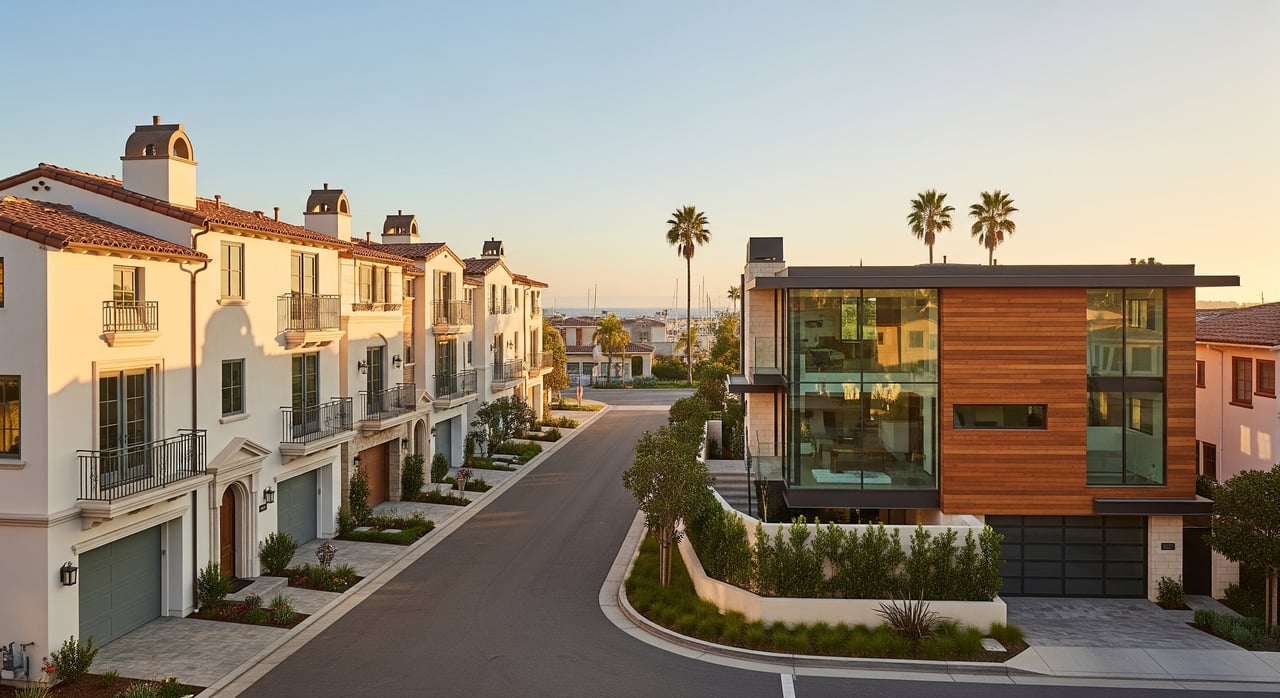
- Townhomes: Often closer to the harbor or beach with a lower entry price. You will trade some privacy and yard space for convenience and HOA-covered exterior upkeep. Monthly fees add predictability, but special assessments can arise.
- Single-family homes: Typically command a premium for land, separation and private yards. You gain flexibility to remodel and more storage and parking, but you take on all exterior maintenance.
- Location patterns: Attached homes cluster near the waterfront and retail corridors. Detached homes dominate many inland and hillside pockets.
Where each home type is common
Waterfront and walkable hubs
In Newport Beach, you will find more townhomes and condos near the water and around commercial nodes. Areas like Balboa Peninsula, Balboa Island and Lido Isle often feature compact lots, attached living and harbor-proximate buildings. If you want short walks to marinas, restaurants and beach paths, attached product is common in these zones.
Inland and hillside pockets
Detached homes dominate many inland neighborhoods and hillside settings. In places like Newport Coast and parts of Corona del Mar, single-family properties often provide larger private outdoor areas, greater separation from neighbors and room for future improvements, all while staying a short drive from the coast.
Costs and ownership details
HOA fees and what they cover
Most townhomes are part of a Common Interest Development governed by an HOA under California’s Davis-Stirling Act. Expect CC&Rs, bylaws and rules that define what the HOA maintains versus what you maintain.
- HOAs commonly handle exterior building elements, roof, siding, paint, common landscaping and shared utilities or amenities.
- Owners typically handle interiors and in-unit systems. Balconies, windows and patios vary by CC&Rs, so confirm scope in writing.
- Review the budget, reserve study, insurance master policy, meeting minutes, delinquency rates and any history of special assessments.
Single-family homes outside gated or planned communities usually have no monthly HOA fee. You cover all maintenance and landscaping, but you also control timing, materials and contractors.
Taxes and special districts
Property taxes follow Orange County schedules based on assessed value. Some newer or planned areas may carry Mello-Roos or other special district taxes. Coastal locations can include localized assessments tied to beach, harbor or flood control improvements. Always verify on preliminary title and county records so you understand true carrying costs.
Insurance and risk transfer
Townhome owners usually carry an HO-6 policy for interiors and personal property. The HOA’s master policy may cover the exterior structure and common areas, but coverage varies. Confirm whether the master policy is “walls-in” or “bare-walls,” and what improvements you must insure.
Single-family owners typically carry an HO-3 or HO-5 policy that covers the structure and personal property. In both product types near the coast, ask about flood insurance and earthquake coverage. Lenders often require flood insurance if the property is in a FEMA Special Flood Hazard Area. Also check whether the block lies in a tsunami evacuation zone or is flagged in sea-level rise projections.
Lifestyle: privacy, outdoor space and parking
Privacy and noise
Townhomes share walls and sometimes roofs. Construction quality and building age affect sound transmission. If privacy is a top priority, single-family homes usually provide more separation, lower noise transfer and the ability to add privacy landscaping.
Outdoor space and yard use
Townhomes often include patios, decks or balconies and access to communal green spaces. Private yards are typically smaller or limited. If you want gardening space, a private pool or room for pets to roam, a single-family home with a traditional yard is usually the better fit.
Parking, storage and EV charging
Townhomes often include an attached or detached garage and guest parking within the development. Street parking can be restricted by HOA rules. Confirm assigned spaces, guest policies and any limitations on storage in shared garages. For EV charging, review the HOA’s policy and process. California law can influence charger installation requests, but you will still follow HOA procedures and city permitting. Single-family owners usually face fewer hurdles installing EV chargers in a private garage, subject to local permits.
Coastal and permitting realities
Flood, tsunami and sea-level considerations
Parts of Newport Beach sit at low elevation and can be exposed to coastal flooding, king tides and long-term sea-level rise. Before you write an offer, check FEMA flood maps, local elevation details and city or county flood planning resources. Lenders scrutinize flood exposure, and required coverage can affect monthly costs.
Coastal permits and remodel plans
If you intend to expand or significantly remodel near the shoreline, factor in the California Coastal Act and local coastal permitting. Some projects require Coastal Development Permits, and shoreline work such as seawalls or docks is tightly regulated. Ask city planning staff about jurisdiction and the realistic timeline before you budget for a major exterior change.
Short-term rental rules
Newport Beach enforces specific rules for short-term rentals. Some neighborhoods prohibit or tightly restrict them, and HOAs may add their own limits. If rental flexibility matters, verify municipal requirements and the CC&Rs before relying on projected income.
Resale value and financing
What drives resale potential
Detached homes often capture land value premiums. Lot size, neighborhood prestige, proximity to water and views are key drivers. For attached product, HOA health matters. Strong reserves, a clear maintenance plan, low delinquency rates and limited special assessments are positive signals for future buyers and lenders.
Financing differences to know
Condos and townhomes can face stricter project-level underwriting. Lenders may review the HOA’s budget, reserves, litigation status and investor-ownership share. If you are considering a townhome, engage a local lender early to confirm project approval requirements, especially for conforming loans tied to Fannie Mae or Freddie Mac standards. Strong HOA documentation can expand your loan options and support smoother closings.
Quick buyer checklists
For any Newport Beach home
- Pull recent neighborhood comps and days-on-market.
- Order a general home inspection and a termite inspection. Add roof, HVAC, sewer lateral and moisture checks as needed for coastal exposure.
- Verify flood zone status and whether flood insurance will be required by a lender.
- Ask about the age and condition of major systems and any transferable warranties.
For townhomes and HOAs
- Request CC&Rs, bylaws, rules, 12 months of meeting minutes, current budget, reserve study, master insurance summary, fee history and special assessment history.
- Clarify responsibility for roof, windows, balconies, exterior paint and patios.
- Confirm assigned parking, guest rules, street parking allowances and EV charging policy and process.
- Ask about pending capital projects, litigation and rental restrictions.
For single-family homes
- Confirm lot boundaries, setbacks, easements and any nearby planned development.
- Verify the presence and condition of seawalls or shoreline structures, plus maintenance obligations.
- Check for Mello-Roos or other special taxes and any upcoming public works that could affect drainage or access.
For water-adjacent blocks
- Ask if the home is in a tsunami evacuation zone and whether there is a history of flooding or coastal erosion on the street.
- Review permits for seawalls, docks and shoreline improvements and confirm who maintains them.
Which fit is right for you?
You might prefer a townhome if you want low exterior maintenance, walkable access to water and retail, a lower entry price into Newport Beach and predictable monthly costs. This structure can be ideal if you value amenities and do not need a large private yard.
You might prefer a single-family home if you want maximum privacy, room for pets, a garden or a pool, plus the ability to remodel or expand over time. If you are comfortable managing variable exterior maintenance and you value owning land, a detached home often aligns best.
Ready to compare real options that match your lifestyle and budget? With legal-minded guidance on CC&Rs, coastal permits and financing, you can move forward with clarity. If you want a tailored path to your Newport Beach address, connect with Jade Larney Real Estate for boutique, client-first advice and a clear action plan. Request a Consultation & Free Home Valuation.
FAQs
How much cheaper is a townhome in Newport Beach once HOA fees are included?
- Pricing varies by micro-neighborhood, proximity to water and HOA costs; review recent comps side by side with monthly fees and reserves to compare true carrying costs.
What does an HOA usually cover for a Newport Beach townhome?
- Many HOAs cover exterior maintenance, roof, siding, exterior paint, common landscaping and amenities, while owners handle interiors; confirm exact scope in the CC&Rs and master insurance summary.
How do I evaluate flood and sea-level risk for a specific address?
- Check FEMA flood maps, local elevation details and city or county flood planning resources, then get insurance quotes early if the home is in or near a designated flood zone.
Can I install an EV charger in a townhome garage?
- Often yes, but you must follow HOA procedures and city permitting; review the HOA’s EV policy and California requirements before planning installation.
Are short-term rentals allowed in Newport Beach neighborhoods?
- Rules are strict and vary by area and HOA; confirm current municipal ordinances and the CC&Rs before assuming rental flexibility.
Do lenders treat townhome financing differently in Orange County?
- Yes; project-level underwriting can apply, and HOA finances, reserves and investor occupancy levels can affect loan options; consult a local lender early.
Can a Newport Beach townhome offer enough yard space for pets or gardening?
- Some townhomes offer patios or small yards, but larger private yards are less common; if a generous yard is a must-have, target single-family homes.
What inspections are most important for coastal properties?
- In addition to a general and termite inspection, consider roof, HVAC, sewer lateral and moisture checks, and assess salt-air exposure and any shoreline structures.